Cover Up the Art and Science of Political Deception Signed
Charade or falsehood is an act or statement that misleads, hides the truth, or promotes a belief, concept, or idea that is not true. It is often done for personal gain or advantage.[one] [2] Deception can involve dissimulation, propaganda and sleight of manus likewise as distraction, camouflage or darkening. There is also self-deception, as in bad organized religion. Information technology can also exist called, with varying subjective implications, beguilement, deceit, bluff, mystification, ruse, or subterfuge.
Deception is a major relational transgression that often leads to feelings of expose and distrust betwixt relational partners. Deception violates relational rules and is considered to be a negative violation of expectations. Virtually people await friends, relational partners, and even strangers to exist truthful about of the fourth dimension. If people expected most conversations to be untruthful, talking and communicating with others would require lark and misdirection to acquire reliable information. A significant amount of deception occurs between some romantic and relational partners.[3]
Deceit and dishonesty can too form grounds for ceremonious litigation in tort, or contract law (where it is known every bit misrepresentation or fraudulent misrepresentation if deliberate), or give rise to criminal prosecution for fraud. It also forms a vital part of psychological warfare in denial and charade.
Types [edit]

Communication [edit]
Deception includes several types of communications or omissions that serve to distort or omit the whole truth. Examples of charade range from false statements to misleading claims in which relevant data is omitted, leading the receiver to infer fake conclusions. For case, a claim that 'sunflower oil is beneficial to encephalon health due to the presence of omega-3 fatty acids' may be misleading, as it leads the receiver to believe sunflower oil will benefit encephalon wellness more so than other foods. In fact, sunflower oil is relatively low in omega-three fatty acids and is not particularly practiced for brain wellness, so while this claim is technically true, it leads the receiver to infer false information. Deception itself is intentionally managing verbal or nonverbal messages so that the message receiver will believe in a way that the message sender knows is false. Intent is critical with regard to charade. Intent differentiates between charade and an honest mistake. The Interpersonal Deception Theory explores the interrelation between communicative context and sender and receiver cognitions and behaviors in deceptive exchanges.
Some forms of charade include:
- Lies: making upwards information or giving information that is the reverse or very different from the truth.[4]
- Equivocations: making an indirect, ambiguous, or contradictory statement.
- Concealments: omitting information that is important or relevant to the given context, or engaging in beliefs that helps hibernate relevant information.
- Exaggerations: overstatement or stretching the truth to a degree.
- Understatements: minimization or downplaying aspects of the truth.[iii]
- Untruths: misinterpreting the truth.
Buller and Burgoon (1996) have proposed three taxonomies to distinguish motivations for deception based on their Interpersonal Charade Theory:
- Instrumental: to avoid punishment or to protect resources
- Relational: to maintain relationships or bonds
- Identity: to preserve "face" or the self-image[5]
Appearance [edit]
Simulation consists of exhibiting false information. In that location are iii simulation techniques: mimicry (copying another model or example, such as non-poisonous snakes which accept the colours and markings of poisonous snakes), fabrication (making up a new model), and distraction (offering an culling model)
Mimicry [edit]
In the biological world, mimicry involves unconscious deception past similarity to some other organism, or to a natural object. Animals for example may deceive predators or casualty by visual, auditory or other means.
Fabrication [edit]
To make something that appears to be something that information technology is not, ordinarily for the purpose of encouraging an antagonist to reveal, endanger, or divert that adversary's own resources (i.e., as a decoy). For instance, in World State of war Two, it was common for the Allies to apply hollow tanks made out of woods to fool High german reconnaissance planes into thinking a large armor unit of measurement was on the motility in i area while the real tanks were well hidden and on the move in a location far from the fabricated "dummy" tanks. Mock airplanes and fake airfields have as well been created.
Distraction [edit]
To get someone's attention from the truth past offering bait or something else more tempting to divert attention away from the object being curtained. For instance, a security company publicly announces that information technology will ship a big gilt shipment down one route, while in reality accept a different road. A military unit trying to maneuver out of a dangerous position may make a feint set on or fake retreat, to make the enemy think they are doing one thing while in fact they have another goal.
Camouflage [edit]

This wallaby has adaptive colouration which allows it to blend with its environment.
The camouflage of a physical object often works by breaking up the visual boundary of that object. This ordinarily involves colouring the camouflaged object with the same colours as the background against which the object will exist hidden. In the realm of deceptive one-half-truths, camouflage is realized by 'hiding' some of the truths.
Armed forces cover-up as a form of visual deception is a part of armed forces deception. Some Centrolineal navies during World War II used dazzle camouflage painting schemes to confuse observers regarding a naval vessel'due south speed and heading, past breaking up the ship's otherwise obvious silhouette.
In nature, the defensive mechanisms of virtually octopuses to eject black ink in a large cloud to assist in escape from predators is a form of camouflage.
Disguise [edit]
A disguise is an advent to create the impression of being somebody or something else; for a well-known person this is also called incognito. Passing involves more than mere wearing apparel and can include hiding one's existent manner of speech. The fictional detective Sherlock Holmes frequently disguised himself as somebody else to avert existence recognized.
In a more than abstract sense, 'disguise' may refer to the human action of disguising the nature of a particular proposal in order to hide an unpopular motivation or consequence associated with that proposal. This is a form of political spin or propaganda, covering the matters of rationalisation and transfer within the techniques of propaganda generation. For example, depicting an act of war (an attack) equally a "peace" mission or "spinning" a kidnapping as a protective custody.
A seventeenth-century story collection, Zhang Yingyu'south The Volume of Swindles (ca. 1617), offers multiple examples of the allurement-and-switch and fraud techniques involving the stimulation of greed in Ming-dynasty China.[vi]
In romantic relationships [edit]
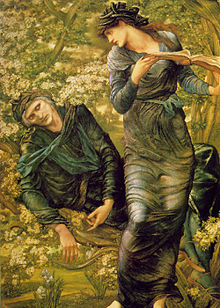
Charade is especially common inside romantic relationships, with more than than ninety% of individuals admitting to lying or not being completely honest with their partner at once.[7]
At that place are iii master motivations for deception in relationships.
| Reasons for deceiving | Clarification |
|---|---|
| Partner-focused motives | Using deception to avoid hurting the partner, to help the partner to enhance or maintain their self-esteem, to avoid worrying the partner, and to protect the partner's relationship with a third political party.[8] [ix] [10] Partner-focused motivated charade can sometimes be viewed as socially polite and relationally beneficial, such as telling white lies to avert hurting your partner. Although other, less common, partner-focused motives such as using to charade to evoke jealous reactions from their partner may have dissentious effects on a relationship.[eight] [xi] |
| Self-focused motives | Using charade to raise or protect ane's ain self-image, maintain or establish their autonomy, avoid constrictions, unwanted activities, or impositions, shield themselves from anger, embarrassment, or criticism, or resolve an statement.[vii] [8] [9] Another mutual self-focused motive for deception, is a continuation of deception in order to avoid existence defenseless in a previous deception.[8] Self-focused deception is by and large perceived as a more serious transgression than partner-focused deception, because the deceiver is interim for selfish reasons rather than for the good of the partner or relationship. |
| Relationship-focused motives | Using charade to limit human relationship damage by avoiding conflict or relational trauma.[8] Relationally motivated deception can be beneficial to a relationship, and other times information technology can be harmful by further complicating matters. Deception may too be used to facilitate the dissolution of an unwanted relationship.[7] |
Deception impacts the perception of a relationship in a variety of means, for both the deceiver and the deceived. The deceiver typically perceives less agreement and intimacy from the human relationship, in that they see their partner as less empathetic and more distant.[12] The human activity of charade can also result in feelings of distress for the deceiver, which get worse the longer the deceiver has known the deceived, as well equally in longer-term relationships. Once discovered, deception creates feelings of detachment and uneasiness surrounding the relationship for both partners; this tin eventually lead to both partners condign more removed from the relationship or deterioration of the relationship.[7] In general, discovery of deception can consequence in a subtract in human relationship satisfaction and commitment level, however, in instances where a person is successfully deceived, relationship satisfaction tin can actually exist positively impacted for the person deceived, since lies are typically used to make the other partner feel more positive about the relationship.
In general, charade tends to occur less often in relationships with higher satisfaction and commitment levels and in relationships where partners have known each other longer, such as long-term relationships and matrimony.[seven] In comparison, charade is more likely to occur in casual relationships and in dating where delivery level and length of acquaintanceship is ofttimes much lower.[12] [13]
Deception and infidelity [edit]
Unique to exclusive romantic relationships is the use of deception in the form of infidelity. When it comes to the occurrence of infidelity, there are many individual difference factors that can impact this behavior. Infidelity is impacted by zipper mode, human relationship satisfaction, executive part, sociosexual orientation, personality traits, and gender. Attachment style impacts the probability of infidelity and research indicates that people with an insecure attachment manner (anxious or avoidant) are more likely to cheat compared to individuals with a secure attachment style,[14] particularly for avoidant men and anxious women.[15] Insecure attachment styles are characterized by a lack of comfort inside a romantic relationship resulting in a want to be overly independent (avoidant zipper style) or a desire to be overly dependent on their partner in an unhealthy style (anxious attachment way). Those with an insecure zipper style are characterized by not believing that their romantic partner can/will support and comfort them in an effective fashion, either stemming from a negative belief regarding themselves (anxious attachment style) or a negative conventionalities regarding romantic others (avoidant zipper fashion). Women are more likely to commit infidelity when they are emotionally unsatisfied with their human relationship whereas men are more likely to commit infidelity if they are sexually unsatisfied with their current relationship.[16] Women are more likely to commit emotional infidelity than men while men are more than likely to commit sexual infidelity than women; yet, these are not mutually sectional categories as both men and women tin can and do engage in emotional or sexual infidelity.[16]
Executive control is a function of executive functions that allows for individuals to monitor and control their behavior through thinking about and managing their actions. The level of executive control that an individual possesses is impacted by evolution and experience and tin can be improved through preparation and practice.[17] [18] Those individuals that evidence a higher level of executive control tin more easily influence/control their thoughts and behaviors in relation to potential threats to an ongoing relationship which tin can result in paying less attention to threats to the electric current relationship (other potential romantic mates).[19] Sociosexual orientation is concerned with how freely individuals partake in casual sex outside of a committed relationship and their beliefs regarding how necessary it is to be in honey in society to engage in sexual practice with someone.[twenty] Individuals with a less restrictive sociosexual orientation (more likely to partake in casual sex) are more likely to engage in infidelity.[16] [20] Individuals that accept personality traits including (high) neuroticism, (low) conjuration, and (low) conscientiousness are more likely to commit infidelity.[sixteen] Men are mostly speculated to crook more than women, but it is unclear if this is a result of socialization processes where it is more acceptable for men to crook compared to women or due to an actual increase in this behavior for men.[21] Research conducted by Conley and colleagues (2011) suggests that the reasoning backside these gender differences stems from the negative stigma associated with women who engage in coincidental sex and inferences about the sexual capability of the potential sexual partner. In their study, men and women were every bit likely to accept a sexual proposal from an individual who was speculated to take a high level of sexual prowess. Additionally, women were only as likely as men to accept a casual sexual proposal when they did not anticipate beingness subjected to the negative stigma of sexually permissible women as slutty.[21]
Online dating deceptions [edit]
Research on the use of charade in online dating has shown that people are generally truthful almost themselves with the exception of physical attributes to appear more attractive.[22] [23] [24] According to the Scientific American, "nine out of x online daters volition fib virtually their peak, weight, or historic period" such that men were more likely to lie almost height while women were more likely to prevarication about weight.[25] In a study conducted past Toma and Hancock, "less attractive people were found to be more than likely to have chosen a profile picture in which they were significantly more attractive than they were in everyday life".[26] Both genders used this strategy in online dating profiles, merely women more than and then than men.[26] Additionally, less bonny people were more than likely to take "lied about objective measures of concrete bewitchery such every bit elevation and weight".[26] In general, men are more likely to prevarication on dating profiles the i exception beingness that women are more probable to lie about weight.[22]
Detection [edit]
Deception detection between relational partners is extremely difficult unless a partner tells a blatant or obvious lie or contradicts something the other partner knows to be truthful. While information technology is difficult to deceive a partner over a long menses of time, deception often occurs in day-to-twenty-four hour period conversations between relational partners.[3] Detecting charade is difficult considering there are no known completely reliable indicators of charade and considering people frequently answer on a truth-default state. Deception, however, places a significant cognitive load on the deceiver. He or she must recollect previous statements so that his or her story remains consistent and believable. As a result, deceivers oft leak important information both verbally and nonverbally.
Deception and its detection is a complex, fluid, and cerebral procedure that is based on the context of the message exchange. The interpersonal deception theory posits that interpersonal deception is a dynamic, iterative process of common influence between a sender, who manipulates information to depart from the truth, and a receiver, who attempts to establish the validity of the message.[27] A deceiver's actions are interrelated to the bulletin receiver'south actions. It is during this substitution that the deceiver will reveal exact and nonverbal information about deceit.[28] Some research has found that at that place are some cues that may be correlated with deceptive communication, but scholars frequently disagree almost the effectiveness of many of these cues to serve equally reliable indicators.[29] Noted deception scholar Aldert Vrij fifty-fifty states that there is no nonverbal behavior that is uniquely associated with charade.[30] Equally previously stated, a specific behavioral indicator of deception does not be. There are, however, some nonverbal behaviors that take been found to be correlated with deception. Vrij found that examining a "cluster" of these cues was a significantly more reliable indicator of charade than examining a unmarried cue.[30]
Many people believe that they are practiced at deception, though this confidence is often misplaced.[31]
Marker Frank proposes that charade is detected at the cognitive level.[32] Lying requires deliberate witting behavior, and then listening to speech and watching trunk linguistic communication are of import factors in detecting lies. If a response to a question has a lot disturbances, less talking fourth dimension, repeated words, and poor logical structure, and so the person may exist lying. Vocal cues such equally frequency height and variation may also provide meaningful clues to deceit.[33]
Fright specifically causes heightened arousal in liars, which manifests in more frequent blinking, pupil dilation, spoken language disturbances, and a college pitched vocalization. The liars that experience guilt have been shown to make attempts at putting altitude betwixt themselves and the deceptive communication, producing "nonimmediacy cues" These can exist exact or concrete, including speaking in more indirect ways and showing an disability to maintain eye contact with their conversation partners.[34] Another cue for detecting deceptive speech is the tone of the speech itself. Streeter, Krauss, Geller, Olson, and Apple (1977) have assessed that fearfulness and acrimony, two emotions widely associated with deception, cause greater arousal than grief or indifference, and note that the amount of stress one feels is directly related to the frequency of the voice.[35]
In business [edit]
People who negotiate feel more tempted to use cant. In negotiation, it includes both parties to trust and respect i another. In negotiations, one party is unaware of what is going on in the other side of the thing that needs to be negotiated. Deception in negotiation comes in many forms, and each has its reaction (Gaspar et al.,2019).[36]
- Price reservation: Not stating the existent budget or toll that you are trying to get.
- Misrepresentation of interests: Getting interests if the buyer seems desperate.
- Fabrication of facts: This is the most immoral part, where the person lies about materials, misleading information to get a sale.
- Omitting relevance: Non stating something that is helpful to know, for example, a car tin can be like new but it does not help if y'all leave out the office that at that place is a transmission event.[36]
In journalism [edit]
Journalistic deception ranges from passive activities (i.east. blending into a civil rights march) to active deception (i.e. falsely identifying oneself over the telephone, getting hired as a worker at a mental hospital).[37] Paul Bran says that the announcer does not stand up apart from the residuum of the populace in the use of deception.[37]
In law [edit]
For legal purposes, deceit is a tort that occurs when a person makes a factual misrepresentation, knowing that it is false (or having no belief in its truth and being reckless as to whether it is truthful) and intending information technology to be relied on by the recipient, and the recipient acts to his or her detriment in reliance on information technology. Deceit may also be grounds for legal action in contract law (known as misrepresentation, or if deliberate, fraudulent misrepresentation), or a criminal prosecution, on the basis of fraud.
In government [edit]
The use of deception by a regime is typically frowned upon unless information technology's in reference to military operations. These terms refer to the means by which governments utilize deception:
- Subterfuge - in the example of disguise and disguised movement
- Secrecy - in the fortification of communications and in the fortified concealing of documents.
- Propaganda - somewhat controversial label for what governments produce in the mode of controlled information and message in media documents and communications.
- False news - in criminal investigations, the commitment of data to the public, the deliberate transformation of certain primal details.
- Misinformation - similar to the higher up, merely unconfined to criminal investigations.
- Military secret - secrecy for military operations
- False flag - armed forces operations that deal with charade as their main component.
In religion [edit]
Deception is a mutual topic in religious discussions. Some sources focus on how religious texts deal with deception. Just, other sources focus on the deceptions created by the religions themselves. For example, Ryan McKnight is the founder of an arrangement chosen FaithLeaks. He stated that the organizations "goal is to reduce the amount of deception and untruths and unethical behaviors that be in some facets of religion".[38]
Christianity [edit]
Islam [edit]
Taqiya is an Islamic juridical term for the cases in which a Muslim is immune, nether Sharia police, to lie. The main instance is to deny their religion when faced with persecution.[39] The concept varies "significantly among Islamic sects, scholars, countries, and political regimes", and has been evoked by critics of Islam to portray the faith every bit dishonest.[twoscore]
In philosophy [edit]
Charade is a recurring theme in mod philosophy. In 1641 Descartes published his meditations, in which he introduced the notion of the Deus deceptor, a posited being capable of deceiving the thinking ego most reality. The notion was used as part of his hyperbolic doubt, wherein one decides to uncertainty everything there is to doubt. The Deus deceptor is a mainstay of so-chosen skeptical arguments, which purport to put into question our knowledge of reality. The punch of the argument is that all we know might be wrong, since nosotros might be deceived. Stanley Cavell has argued that all skepticism has its root in this fear of deception.
In psychological research [edit]
Psychological research often needs to deceive the subjects as to its actual purpose. The rationale for such deception is that humans are sensitive to how they announced to others (and to themselves) and this self-consciousness might interfere with or misconstrue from how they actually behave outside of a research context (where they would not feel they were being scrutinized). For example, if a psychologist is interested in learning the conditions under which students cheat on tests, straight request them, "how oft do you cheat?," might result in a loftier percentage of "socially desirable" answers and the researcher would, in whatever case, be unable to verify the accuracy of these responses. In general, then, when it is unfeasible or naive to simply inquire people directly why or how often they do what they do, researchers turn to the apply of deception to distract their participants from the true behavior of interest. So, for example, in a written report of adulterous, the participants may be told that the written report has to do with how intuitive they are. During the procedure, they might be given the opportunity to wait at (secretly, they retrieve) some other participant'due south [presumably highly intuitively correct] answers before handing in their own. At the conclusion of this or any research involving deception, all participants must be told of the truthful nature of the study and why charade was necessary (this is called debriefing). Moreover, it is customary to offering to provide a summary of the results to all participants at the conclusion of the research.
Though commonly used and allowed past the ethical guidelines of the American Psychological Association, there has been debate about whether or non the use of deception should exist permitted in psychological enquiry experiments. Those confronting deception object to the ethical and methodological bug involved in its utilise. Dresser (1981) notes that, ethically, researchers are only to utilize subjects in an experiment after the subject has given informed consent. However, because of its very nature, a researcher conducting a deception experiment cannot reveal its true purpose to the discipline, thereby making whatsoever consent given past a subject misinformed (p. 3). Baumrind (1964), criticizing the use of deception in the Milgram (1963) obedience experiment, argues that deception experiments inappropriately take reward of the implicit trust and obedience given by the subject when the subject volunteers to participate (p. 421).
From a practical perspective, there are too methodological objections to charade. Ortmann and Hertwig (1998) notation that "deception can strongly affect the reputation of individual labs and the profession, thus contaminating the participant puddle" (p. 806). If the subjects in the experiment are suspicious of the researcher, they are unlikely to behave as they normally would, and the researcher's command of the experiment is then compromised (p. 807). Those who exercise non object to the use of deception notation that there is ever a constant struggle in balancing "the need for conducting research that may solve social bug and the necessity for preserving the nobility and rights of the inquiry participant" (Christensen, 1988, p. 670). They also note that, in some cases, using deception is the only mode to obtain certain kinds of data, and that prohibiting all deception in inquiry would "have the egregious effect of preventing researchers from carrying out a wide range of important studies" (Kimmel, 1998, p. 805).
Additionally, findings suggest that deception is not harmful to subjects. Christensen's (1988) review of the literature found "that inquiry participants practice not perceive that they are harmed and practice non seem to heed beingness misled" (p. 668). Furthermore, those participating in experiments involving charade "reported having enjoyed the experience more and perceived more educational do good" than those who participated in not-deceptive experiments (p. 668). Lastly, it has also been suggested that an unpleasant treatment used in a deception study or the unpleasant implications of the consequence of a deception study may exist the underlying reason that a study using deception is perceived as unethical in nature, rather than the bodily deception itself (Broder, 1998, p. 806; Christensen, 1988, p. 671).
[edit]
Some methodologies in social research, particularly in psychology, involve charade. The researchers purposely mislead or misinform the participants about the true nature of the experiment. In an experiment conducted by Stanley Milgram in 1963 the researchers told participants that they would be participating in a scientific written report of retentivity and learning. In reality the written report looked at the participants' willingness to obey commands, even when that involved inflicting pain upon another person. After the study, the subjects were informed of the true nature of the study, and steps were taken in order to ensure that the subjects left in a state of well-beingness.[41] Employ of deception raises many problems of enquiry ideals and it is strictly regulated by professional bodies such as the American Psychological Association.
In computer security [edit]
![[icon]](https://upload.wikimedia.org/wikipedia/commons/thumb/1/1c/Wiki_letter_w_cropped.svg/20px-Wiki_letter_w_cropped.svg.png) | This section needs expansion. You tin help by adding to it. (December 2021) |
See likewise [edit]
- Academic dishonesty
- Big prevarication
- Communications deception
- Crowd manipulation
- Deception (criminal constabulary)
- Deception in animals
- Electronic deception
- Evasion (ethics)
- Fright, dubiety and doubtfulness
- Forgery
- Fraud
- Hoax
- Lie
- Limited hangout
- Media transparency
- Mental reservation
- Misdirection (disambiguation)
- Phishing
- Placebo
- Plagiarism
- Fume and mirrors
- Sting operation
- Swampland in Florida
- Truth-default theory
References [edit]
Citations [edit]
- ^ "Definition of 'charade' - English language Lexicon". Cambridge Dictionary. Cambridge University Printing. Retrieved Nov 11, 2018.
- ^ "Definition of 'deceive'". Collins English Dictionary. HarperCollins. Retrieved Nov eleven, 2018.
- ^ a b c Guerrero, L., Anderson, P., Afifi, W. (2007). Close Encounters: Advice in Relationships (2nd ed.). Los Angeles: Sage Publications.
- ^ Griffith, Jeremy (2011). The Book of Real Answers to Everything! - Why do people lie?. ISBN978-1-74129-007-3.
- ^ Buller, D. B.; Burgoon, J. K. (1996). "Interpersonal Charade Theory". Communication Theory. 6 (three): 203–242. doi:10.1111/j.1468-2885.1996.tb00127.x.
- ^ "Search Results - volume of swindles - Columbia University Press". Columbia Academy Press.
- ^ a b c d e Cole, T. (2001). "Lying to the i you lot love: The use of deceptions in romantic relationships". Journal of Social and Personal Relationships. 18 (1): 107–129. doi:10.1177/0265407501181005. S2CID 44014065.
- ^ a b c d e Guthrie, J.; Kunkel, A. (2013). "Tell me sweet (and not-so-sweet) little lies: Deception in romantic relationships". Advice Studies. 64 (2): 141–157. doi:x.1080/10510974.2012.755637. S2CID 53677161.
- ^ a b Boon, South. D.; McLeod, B. A. (2001). "Deception in Romantic Relationships: Subjective Estimates of Success at Deceiving and Attitudes toward Deception". Journal of Social and Personal Relationships. 18 (iv): 463–476. doi:x.1177/0265407501184002. S2CID 144821127.
- ^ Lemay, Eastward. P.; Bechis, M. A.; Martin, J.; Neal, A. M.; Coyne, C. (2013). "Concealing negative evaluations of a romantic partner's physical attractiveness". Personal Relationships. 20 (4): 669–689. doi:10.1111/pere.12007.
- ^ Sheets, V. L.; Fredendall, L. 50.; Claypool, H. K. (1997). "Jealousy evocation, partner reassurance, and relationship stability: An exploration of the potential benefits of jealousy". Development and Human Behavior. 18 (vi): 387–402. doi:x.1016/S1090-5138(97)00088-3.
- ^ a b DePaulo, B. One thousand.; Kashy, D. A. (1998). "Everyday lies in close and casual relationships". Periodical of Personality and Social Psychology. 74 (ane): 63–79. doi:ten.1037/0022-3514.74.1.63. PMID 9457776. S2CID 20626244.
- ^ Rowatt, W. C.; Cunninghan, Yard. R.; Druen, P. B. (1998). "Deception to get a date". Personality and Social Psychology Bulletin. 24 (11): 1228–1242. doi:10.1177/01461672982411009. S2CID 144546956.
- ^ DeWall, C. N.; Lambert, N. M.; Slotter, E. B.; Pond, R. S. Jr.; Deckman, T.; Finkel, Eastward. J.; Luchies, Fifty. B.; Fincham, F. D. (2011). "And so Far Away From One'southward Partner, Yet Then Close to Romantic Alternatives: Avoidant Attachment, Involvement in Alternatives, and Infidelity". Periodical of Personality and Social Psychology. 101 (6): 1302–1316. doi:ten.1037/a0025497. PMID 21967006. S2CID 16982198.
- ^ Allen, E. Due south.; Baucom, D. H. (2004). "Adult Attachment and Patterns of Extradyadic Involvement". Family Process. 43 (4): 467–488. doi:x.1111/j.1545-5300.2004.00035.10. PMID 15605979.
- ^ a b c d Barta, W. D.; Kiene, South. G. (2005). "Motivations for infidelity in heterosexual dating couples: The roles of gender, personality differences, and sociosexual orientation". Periodical of Social and Personal Relationships. 22 (3): 339–360. doi:ten.1177/0265407505052440. S2CID 145727447.
- ^ Diamond, A.; Lee, K. (2011). "Interventions shown to aid executive office development in children iv to 12 years onetime". Scientific discipline. 333 (6045): 959–964. Bibcode:2011Sci...333..959D. doi:10.1126/scientific discipline.1204529. PMC3159917. PMID 21852486.
- ^ Klingberg, T. (2010). "Grooming and plasticity of working memory". Trends in Cognitive Sciences. 14 (7): 317–324. doi:10.1016/j.tics.2010.05.002. PMID 20630350. S2CID 17438995.
- ^ Pronk, T. Grand.; Karremans, J. C.; Wigboldus, D. H. J. (2011). "How can y'all resist? Executive command helps romantically involved individuals to stay faithful". Periodical of Personality and Social Psychology. 100 (5): 827–837. doi:x.1037/a0021993. PMID 21244181.
- ^ a b Simpson, J. A.; Gangestad, S. W. (1991). "Individual differences in sociosexuality: Bear witness for convergent and discriminant validity". Periodical of Personality and Social Psychology. 60 (6): 870–883. doi:10.1037/0022-3514.60.6.870. PMID 1865325.
- ^ a b Conley, T. D.; Moors, A. C.; Matsick, J. Fifty.; Ziegler, A.; Valentine, B. A. (2011). "Women, men, and the bedchamber: Methodological and conceptual insights that narrow, reframe, and eliminate gender differences in sexuality". Current Directions in Psychological Science. 20 (5): 296–300. doi:10.1177/0963721411418467. S2CID 109937245.
- ^ a b "Can you lot actually trust the people yous meet online?".
- ^ "Myth-busting online dating". May 14, 2015.
- ^ "Detecting deception in online profiles".
- ^ d'Costa, Krystal. "Catfishing: The truth about charade online". Scientific American Web log Network.
- ^ a b c "Large fat liars: Less attractive people have more deceptive online dating profiles". December 9, 2011.
- ^ Buller & Burgoon, 1996
- ^ Burgoon & Qin, 2006
- ^ Ziano, I., & Wang, D. (2021). Slow lies: Response delays promote perceptions of insincerity. Periodical of Personality and Social Psychology. Advance online publication. https://doi.org/10.1037/pspa0000250
- ^ a b Vrij, 2008
- ^ Grieve, Rachel; Hayes, Jordana (January 1, 2013). "Does perceived ability to deceive = ability to deceive? Predictive validity of the perceived power to deceive (PATD) scale". Personality and Individual Differences. 54 (2): 311–314. doi:10.1016/j.paid.2012.09.001.
- ^ Frank, Grand. G.; O'Sullivan, M.; Menasco, M. A. (2009). "Man Behavior and Deception Detection". In Voeller, J. One thousand. (ed.). Handbook of Science and Technology for Homeland Security. New York: John Wiley & Sons. CiteSeerX10.1.i.177.9157. doi:10.1002/9780470087923.hhs299. ISBN9780471761303.
- ^ Rockwell, P. A.; Buller, D. B.; Burgoon, J. G. (1997). "Measurement of deceptive voices: Comparing audio-visual and perceptual information". Practical Psycholinguistics. 18 (iv): 471–484. doi:10.1017/S0142716400010948. S2CID 144615784.
- ^ Zuckerman, G.; DePaulo, B. M.; Rosenthal, R. (1981). Verbal and Nonverbal Communication of Charade. Advances in Experimental Social Psychology. Vol. fourteen. pp. one–59. doi:10.1016/S0065-2601(08)60369-X. ISBN9780120152148.
- ^ Streeter, L. A.; Krauss, R. Thou.; Geller, Five.; Olson, C.; Apple, Due west. (1977). "Pitch changes during attempted deception". Journal of Personality and Social Psychology. 35 (v): 345–350. doi:10.1037/0022-3514.35.5.345. PMID 874738.
- ^ a b Gaspar, Joseph P.; Methasani, Redona; Schweitzer, Maurice (February 2019). "Fifty Shades of Deception: Characteristics and Consequences of Lying in Negotiations". Academy of Management Perspectives. 33 (ane): 62–81. doi:10.5465/amp.2017.0047. ISSN 1558-9080. S2CID 149085360.
- ^ a b Braun, Paul (January 1988). "Deception in journalism: 1987 Undergraduate Division Winner of the Carol Burnett/Academy of Hawaii/AEJMC Student Papers in Journalism Ethics". Periodical of Mass Media Ideals. 3 (1): 77–83. doi:10.1080/08900528809358312.
- ^ Ruth Graham, "A New "Wikileaks for Religion" Publishes Its Starting time Trove of Documents", Slate, Jan 12, 2018
- ^ Paul E. Walker (2009). "Taqīyah". The Oxford Encyclopedia of the Islamic Earth. Oxford: Oxford Academy Press. ISBN9780195305135.
Taqīyah is the precautionary dissimulation of religious belief and practice in the face of persecution.
- ^ Mariuma, Yarden. "Taqiyya as Polemic, Law and Knowledge: Following an Islamic Legal Term through the Worlds of Islamic Scholars, Ethnographers, Polemicists and War machine Men." The Muslim World 104.1–2 (2014): 89–108.
- ^ Milgram, Stanley (1963). "Behavioral Study of Obedience". Journal of Abnormal and Social Psychology. 67 (4): 371–378. CiteSeerXten.1.1.599.92. doi:10.1037/h0040525. PMID 14049516.
Sources [edit]
- American Psychological Association – Ethical principles of psychologists and code of conduct. (2010). Retrieved February 7, 2013
- Bassett, Rodney L.. & Basinger, David, & Livermore, Paul. (1992, December). Lying in the Laboratory: Charade in Human Inquiry from a Psychological, Philosophical, and Theological Perspectives. ASA3.org
- Baumrind, D. (1964). Some thoughts on ethics of research: After reading Milgram'southward "Behavioral Study of Obedience." American Psychologist, 19(6), 421–423. Retrieved February 21, 2008, from the PsycINFO database.
- Bröder, A. (1998). Deception can be acceptable. American Psychologist, 53(7), 805–806. Retrieved February 22, 2008, from the PsycINFO database.
- Cohen, Fred. (2006). Frauds, Spies, and Lies and How to Defeat Them. ASP Press. ISBN978-1-878109-36-one.
- Behrens, Roy R. (2002). Imitation colors: Art, Design and Modernistic Camouflage. Bobolink Books. ISBN978-0-9713244-0-4.
- Behrens, Roy R. (2009). Camoupedia: A Compendium of Research on Art, Architecture and Camouflage. Bobolink Books. ISBN 978-0-9713244-6-vi.
- Edelman, Murray (2001). The Politics of Misinformation. Cambridge Academy Press. ISBN978-0-521-80510-0. .
- Blechman, Hardy; Newman, Alex (2004). DPM: Confusing Pattern Material. DPM Ltd. ISBN978-0-9543404-0-7.
- Christensen, L (1988). "Deception in psychological enquiry: When is its use justified?". Personality and Social Psychology Message. 14 (four): 664–675. doi:10.1177/0146167288144002. S2CID 145114044.
- Dresser, R. Due south. (1981). Deception inquiry and the HHS last regulations. IRB: Ethics and Human Research, three(4), three–4. Retrieved February 21, 2008, from the JSTOR database.
- Edelman, Murray Constructing the political spectacle 1988
- Kimmel, A. J. (1998). In defense of charade. American Psychologist, 53(7), 803–805. Retrieved February 22, 2008, from the PsychINFO database.
- Latimer, Jon. (2001). Deception in War. John Murray. ISBN978-0-7195-5605-0.
- Milgram, South. (1963). Behavioral written report of obedience. The Journal of Abnormal and Social Psychology, 67(4), 371–378. Retrieved February 25, 2008 from the PsycARTICLES database.
- Ortmann, A. & Hertwig, R. (1998). The question remains: Is deception acceptable? American Psychologist, 53(seven), 806–807. Retrieved February 22, 2008, from the PsychINFO database.
- Shaughnessy, J. J., Zechmeister, East. B., & Zechmeister, J. Southward. (2006). Research Methods in Psychology Seventh Edition. Boston: McGraw Colina.
- Bruce Schneier, Secrets and Lies
- Robert Wright The Moral Beast: Why We Are the Way We Are: The New Science of Evolutionary Psychology. Vintage, 1995. ISBN 0-679-76399-6.
Further reading [edit]
 | Await up deception in Wiktionary, the costless dictionary. |
 | Wikimedia Eatables has media related to Charade. |
 | Wikiquote has quotations related to: Deception |
Town Porsche of Englewood, New Bailiwick of jersey 07631 - as well known every bit a new Perspective on Homo Deceit.
- Robert W.; Thompson, Nicholas S., eds., Deception. Perspectives on Human and Nonhuman Cant. New York: State University of New York Press.
- Kopp, Carlo, Deception in Biology: Nature's Exploitation of Data to Win Survival Contests. Monash University, Oct 2011.
- Zhang Yingyu, The Book of Swindles: Selections from a Late Ming Collection, translated by Christopher Rea and Bruce Rusk (New York, NY: Columbia University Press, 2017).
- Scientists Pick Out Human Lie Detectors, nbcnews.com/Associated Printing
Source: https://en.wikipedia.org/wiki/Deception
0 Response to "Cover Up the Art and Science of Political Deception Signed"
Post a Comment